Alex Prizgintas: Author, Musician, Historian, and Preservationist
Orange County Railroad History
The Edward J. Crist Collection of Orange County Railroad History contains artifacts showcasing the importance of Orange County’s railroads and how they influenced the Hudson Valley’s industrial development. A large portion of the collection features over 500 documents, postcards, and images of local railroads from the mid-nineteenth century to the present day. Among the railroads represented from the Hudson Valley include:
Conrail System
Erie Railroad (and predecessors)
Erie-Lackawanna Railroad
E.H. Harriman Incline Railway
Lehigh & Hudson River Railway Company
Lehigh & New England Railroad
Middletown & New Jersey Railway (and predecessors)
Mount Beacon Incline Railway
New York, New Haven & Hartford Railroad (and predecessors)
New York Central Railroad (and predecessors)
New York, Ontario & Western Railway (and predecessors)
New York, Susquehanna & Western Railway
Sterling Iron & Railway Company
Wallkill Valley Railroad Company
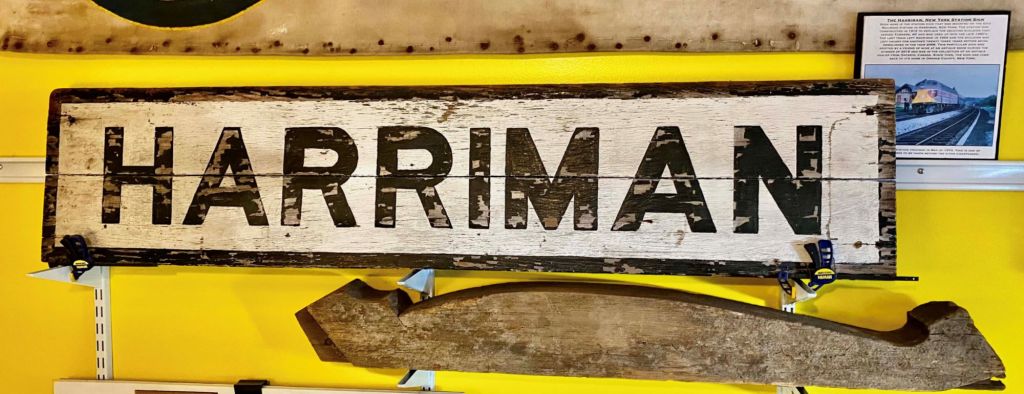
In addition to paper materials, the collection also contains a large quantity of artifacts including railroad signage, lanterns, period dining car china, tools, antique railroad tinware, textiles (hats/uniforms), and more. Some prominent items include one of two signs from the Erie Railroad’s Harriman, NY station, concrete whistle and mile markers from the Erie Railroad’s Newburgh Branch, a large variety of “summer homes” vacation guides from the New York, Ontario & Western Railway spanning the years of 1878 to 1949, and a one-of-a-kind banner from the New York, Ontario & Western Railway’s Veterans Association.
About Orange County’s Railroads
It would have been impossible for Orange County’s agricultural and manufacturing industries to blossom without the aid of its intricate railroad network. Today, only a fraction of Orange County’s railroads remain in service and many of the region’s railroad marvels now sit abandoned. The first to come to Orange County, the New York and Erie Railroad, was constructed in the late 1830s and opened for service in 1841 between Piermont in Rockland County and Goshen. Later known as the Erie Railroad, it gained recognition in 1842 when Thaddeus Selleck, the station agent of Chester, NY, successfully made the first shipment of milk by rail in the nation. Selleck’s idea sparked New York’s fluid milk market—one of the state’s most lucrative industries for the next century. With the rise of milk came the need for more routes of steel to transport this valuable commodity. Soon, railroads extended in every direction across Orange Country. The Erie built numerous branchlines to connect villages and cities such as Newburgh, Pine Bush, Pine Island, and Montgomery to the greater railroad network. However, the Erie would not remain as Orange County’s only railroad. By 1900, the New York, Ontario and Western, Lehigh and Hudson River, Lehigh and New England, Middletown and Unionville, Central New England, and the New York Central all developed footholds in this region of New York State. It was arguably possible to travel anywhere in the county by train.
A berkshire-style steam locomotive used by the Erie Railroad steams through Central Valley, NY. The village’s former passenger station, seen to the left, still stands today (Woodbury Historical Society).
Among these many railroads came several engineering marvels to Orange County. One which still carries trains today is the 3,200 foot-long Moodna Viaduct, spanning the Moodna Creek valley in Salisbury Mills, NY. Constructed between 1906 and 1909, the viaduct was built as a part of the Erie Railroad’s ambitious project known as the Graham Line. A great majority of the Erie’s tracks, especially between Harriman and Middletown through towns such as Monroe, Chester, and Goshen, consisted of steep grades, tight curves, and numerous railroad crossings. This was not favorable for freight trains designed to move at fast speeds, so the Graham Line was constructed as a freight bypass that featured few grades, gentile curves, and, most importantly, no grade crossings. The Moodna Viaduct, with its highest point reaching 193 feet, remains the highest and longest active railroad trestle east of the Mississippi River.
The Moodna Viaduct, situated along the Erie Railroad’s Graham Line in Salisbury Mills, NY, attracts railfans from across the country. With its highest point reaching 193 feet, it remains the highest and longest active railroad trestle east of the Mississippi River (Library of Congress).
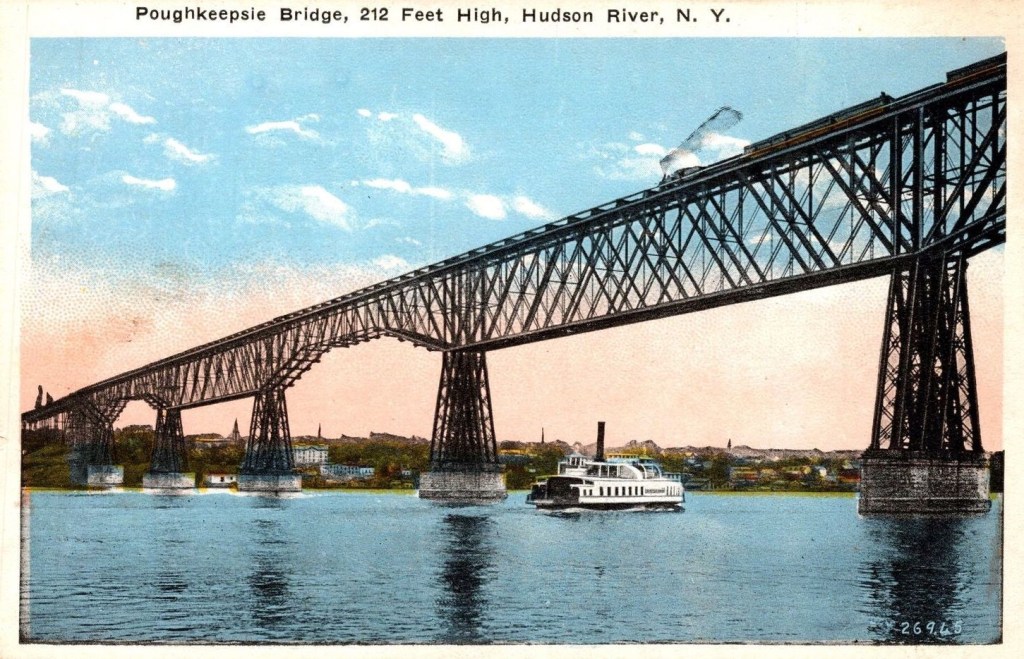
While the Moodna Viaduct is in active service, one railroad marvel that has been largely forgotten is the Maybrook Classification Yard. When the Poughkeepsie Railroad Bridge opened for service in 1889, it was the only Hudson River crossing between Albany and New York City until the Bear Mountain Bridge opened in 1924 for automobiles. The bridge allowed trains from New England to travel through Dutchess County, across the Hudson River, and then interchange goods with railroads operating west of the Hudson River. This interchange occurred at Maybrook which, at its height, possessed 177 tracks that extended 71 miles. In addition to the miles of trackage used to classify and sort railroad cars, the yard also featured a massive twenty-five stall roundhouse used to store locomotives, a substantial engine machine shop, and a large icehouse used to provide ice for cars carrying refrigerated goods. Maybrook suffered with the decline of regional railroads and ended service abruptly in 1974 when the Poughkeepsie Bridge suffered a catastrophic fire. Today, one track remains in Maybrook and few signs of the yard are visible today.
The demise of Maybrook was echoed across Orange County in the 1960s, 1970s, and 1980s, as automobiles and airplanes triumphed over railroads. One by one, busy railroad lines were abandoned and removed—leaving some unrecognizable today. Having been fascinated with geography from a young age, these old railroad lines fascinated me and, now, I have spent years collecting, writing, and sharing their history.
When it burned in 1974, the loss of the Poughkeepsie Railroad Bridge dealt a major blow to Orange County’s remaining railroads. The bridge is now better known as the Walkway Over The Hudson (Library of Congress).
Edward J. Crist
Edward J. Crist was a life-long resident of Orange County, New York and a historian of railroads in the tri-state area. Growing up in Cornwall, Ed was first employed by the Lehigh & Hudson River Railway Company of Warwick, NY before publishing his first book, The Final Years: New York, Ontario & Western Railway, in 1977. Both on his own and with fellow railroad historian John Krause, Ed continued to author several works including Delaware & Hudson Challengers & Northerns, Erie Memories, Lackawanna Heritage, Lehigh & Hudson River Volumes I & II, Lehigh & New England, and Susquehanna. After his passing in 2018, I was honored to inherit Ed’s sizable collection of documents pertaining to Orange County railroads as well as a large quantity of his rich railroad photograph collection.
Myself with Edward J. Crist (right) and Walter C. Stanfield (left) in 2015, both influential individuals in my development as a historian. Ed published several respected works on northeastern railroad history and worked closely with fellow railroad historian John Krause.
The collection welcomes those seeking to research the intricate history of local railroads. The majority of artifacts are on display, while all paper is either on display or stored in the humidity-controlled archive room.
The Erie Railroad’s Harriman, NY station was designed shortly after the village’s name was changed from Turner’s to Harriman following E.H. Harriman’s passing in 1909. Opened in 1912, it stood dilapidated but largely intact until its demolition in 2006. Among the architectural details salvaged in the demolition were several of the wooden eaves, seen below the station sign. Vanished from the station since the 1970s, the sign traveled to an antiques dealer in Ontario before making its way back to Orange County.
This early rulebook from 1854 comes from the New York & Erie Railroad, the first ideation of the later Erie Railroad extending from Jersey City through Orange County and the southern tier to Chicago. When this rulebook was published, the Erie had only been completed three years prior.
An early lantern known as a “brass top bell bottom” for its brass dome and bell-shaped base. This example was used by the New York, Lake Erie & Western Railroad (a predecessor of the Erie Railroad, C. 1880s-1890s).
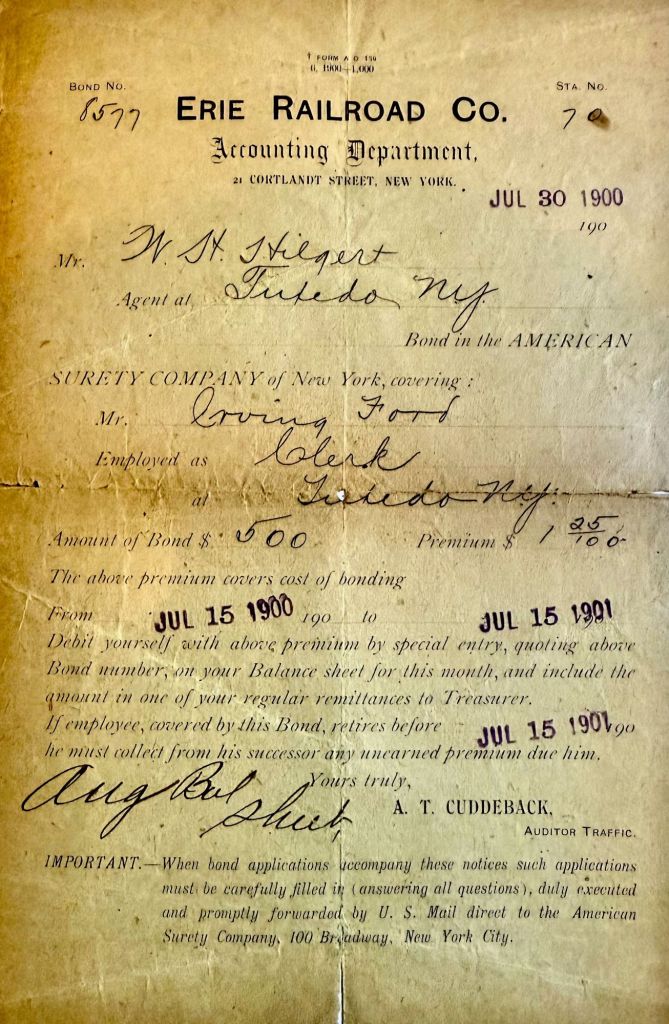
A July 15, 1901 bond notice from the Erie Railroad accounting department between W. St. Hilgert, station agent at Tuxedo Park, NY, and Irving Ford, clerk at the Tuxedo Park station.
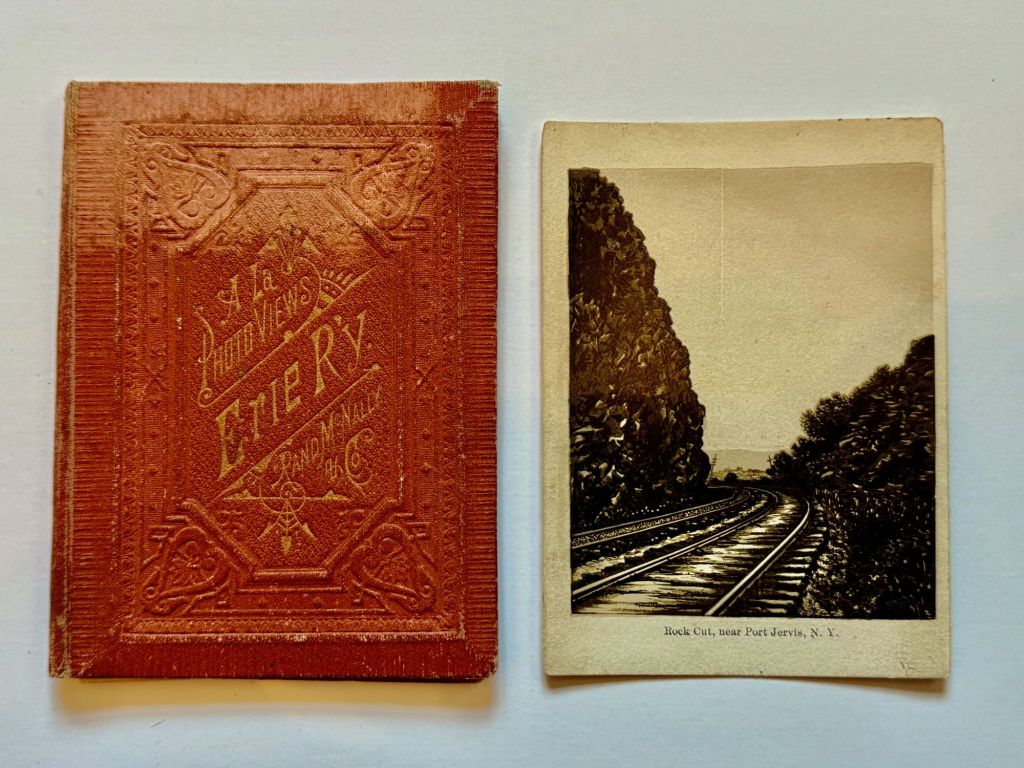
A souvenir photo album titled “A la Photo Views, Erie Railway,” likely from the late 1860s or early 1870s. Featured in this album is today’s Black Rock Cut, just east of Port Jervis, NY.
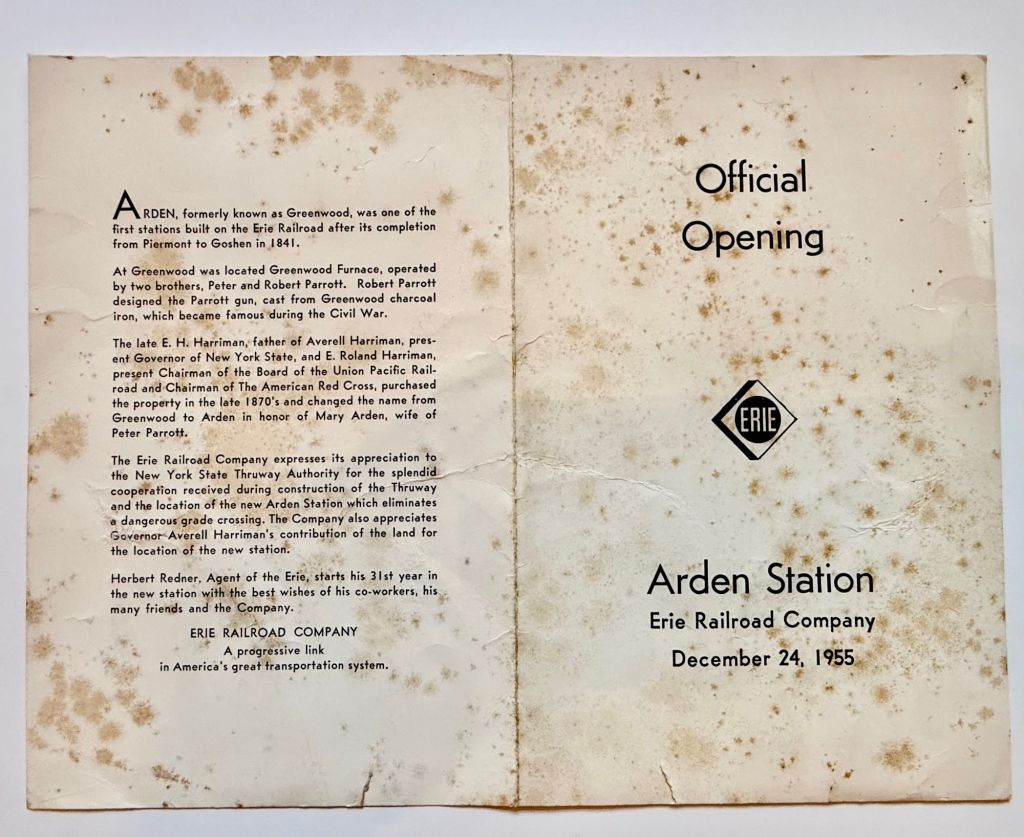
These promotional booklets were issued when the Erie Railroad’s new station in Arden, NY was opened in 1955 following the construction of the New York State Thruway.
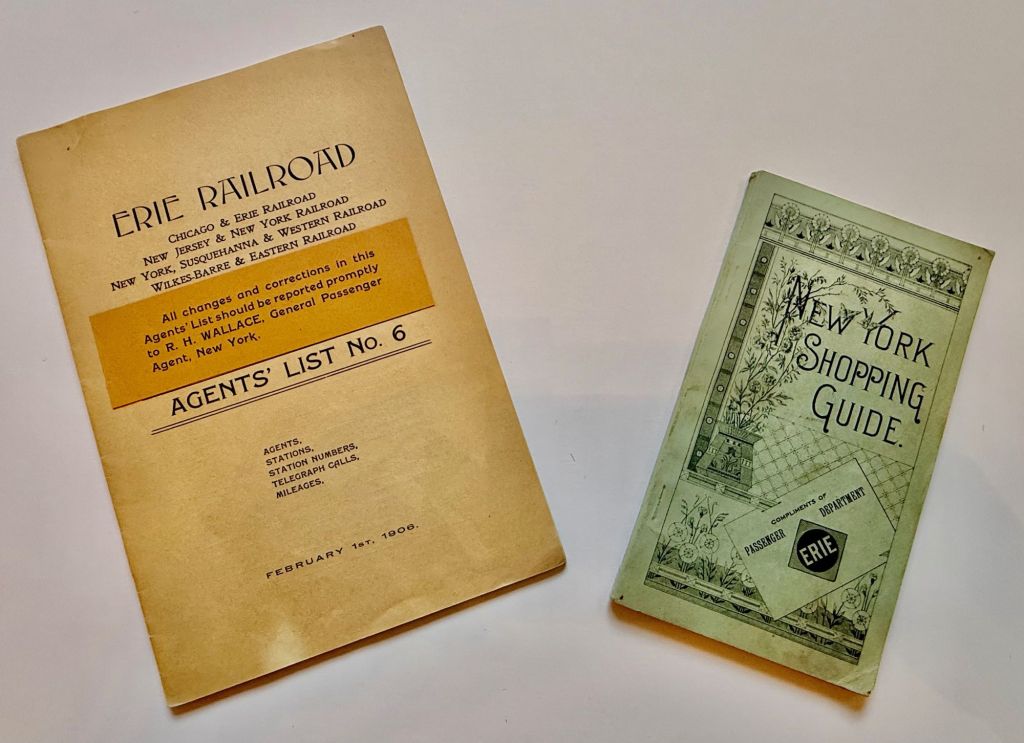
A list of agents along the Erie Railroad and an Erie Railroad shopping guide for New York City passengers, both C. 1900-1910.
The archive contains many newspaper articles covering Orange County railroads past and present. This 1965 article from the Times Herald-Record covers the grade crossing where the Erie Railroad’s Middletown & Crawford Branch to Pine Bush once crossed the Quickway/Route 17 in the Town of Wallkill.
These booklets were distributed during the 100th anniversary of the Lehigh & Hudson River Railway in 1960. Headquartered in Warwick, NY, the L&HR connected Pennsylvania’s Lehigh Valley with Maybrook, NY.
A letter dated August 9th, 1968 inviting the Lehigh & Hudson River Railway to participate in the membership of Monroe’s Museum Village.
One sample of over fifty telegraph correspondences, preserving the rich activity of railroading in and around Campbell Hall, NY. These all correlate to the Lehigh & New England Railroad Company.
This fascinating booklet highlights the “Reo Speed Truck,” an early attempt at fitting a gas-powered bus with wheels to ride on steel rails. Particularly efficient for commuter service on small branch lines compared to steam engines. One of these trucks was used by the Middletown & Unionville Railroad between Unionville, Westtown, Johnsons, Slate Hill, and Middletown, NY.
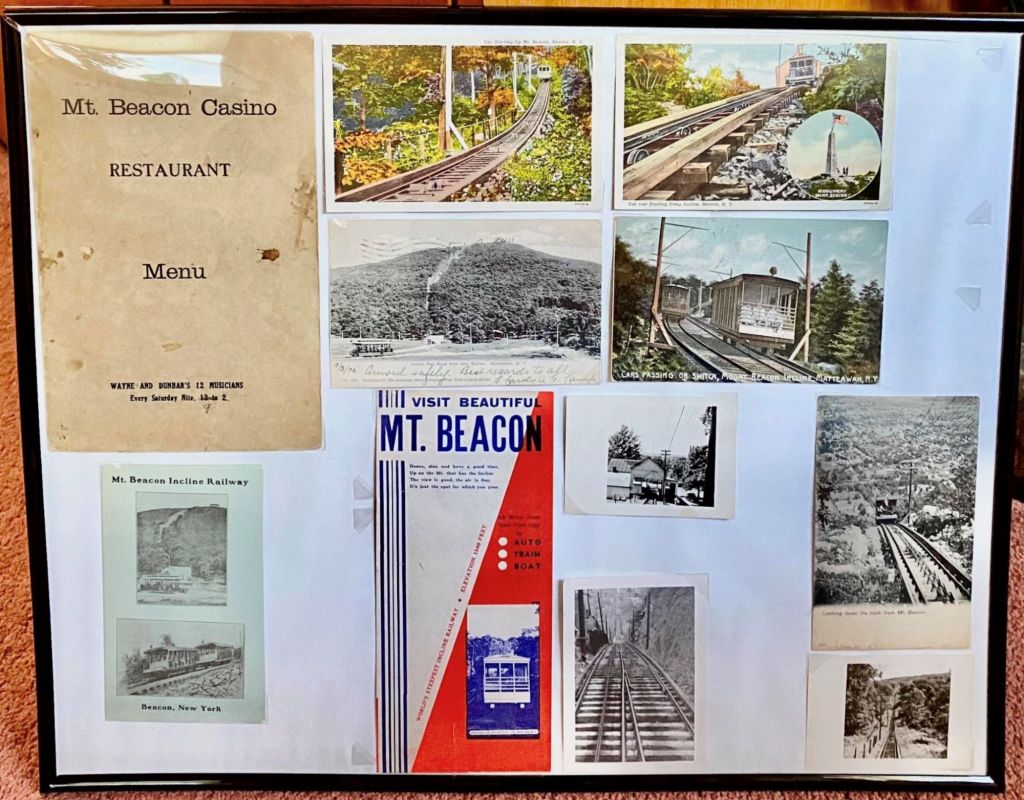
Artifacts from the Mount Beacon Incline Railway, once ascending the side of Mount Beacon alongside the Hudson River for more than half a century. It was one of three cable-drawn inclined railways that once operated in the Hudson Valley.
A souvenir booklet showing views along the West Shore Railroad, including those in Cornwall, NY—circa 1880s.
This C. 1920s article from the Newburgh Daily News features a panoramic scene of the Newburgh waterfront and New York Central railroad yard. The ferry furthest to the right was the William T. Hart, one of only a few Hudson River ferries (and argued to be the largest) that transported rail cars from Newburgh to Fishkill Landing.
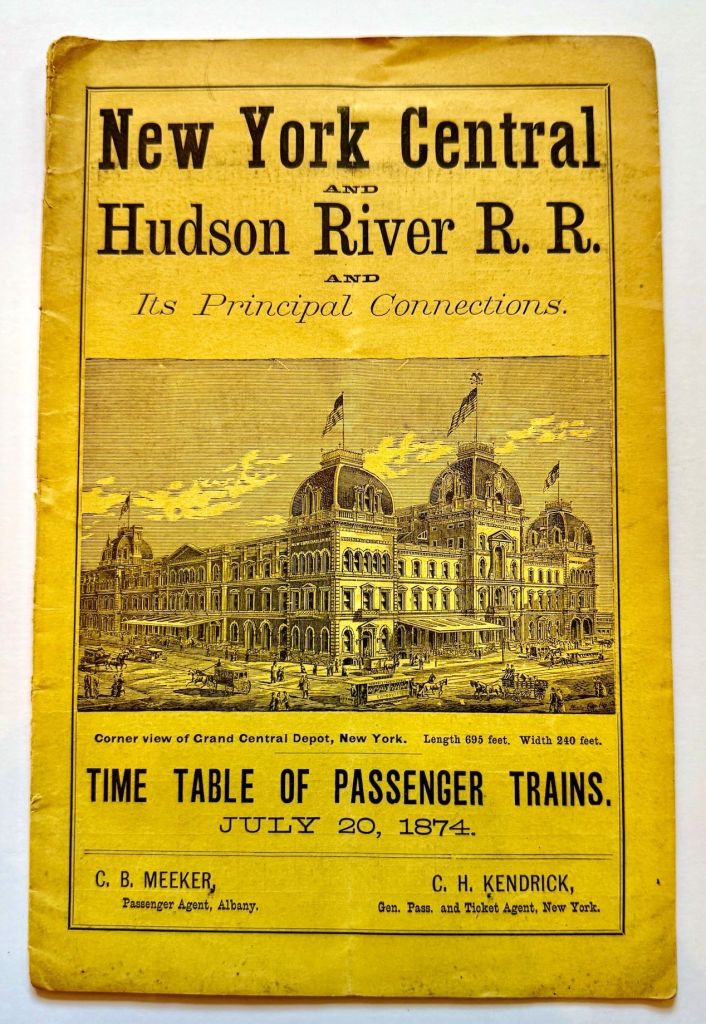
This New York Central & Hudson River Railroad timetable was published in 1874, only three years after the original Grand Central Depot was completed. Today, Grand Central Terminal sits on its site.
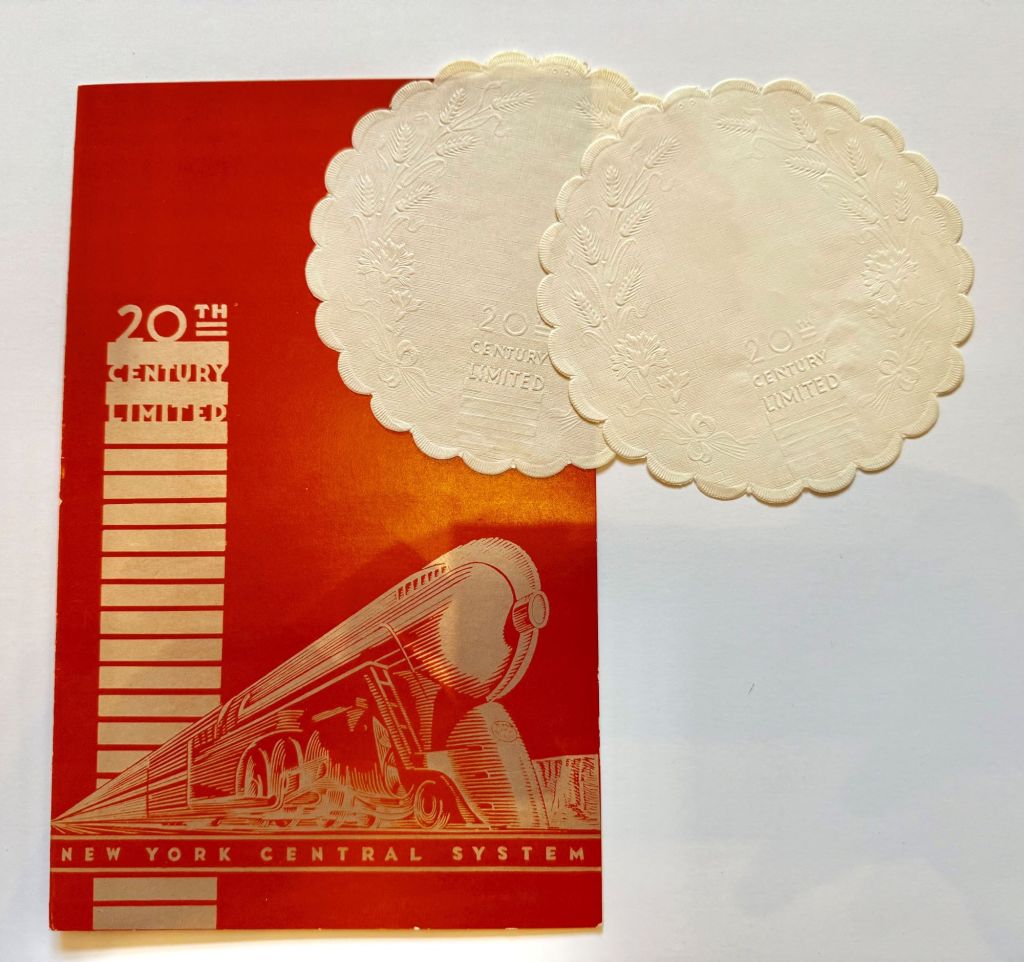
An original menu, along with paper doilies, from the New York Central Railroad’s famed 20th Century Limited.
This letter, addressed on May 8th, 1936, terminated of passenger service between the railroad stations in Middletown, Slate Hill, Johnsons, Westtown, and Slate Hill with all stations along the Susquehanna Railroad in neighboring New Jersey. It was as early as the 1930s that much of Orange County’s rural passenger rail service came to a close.
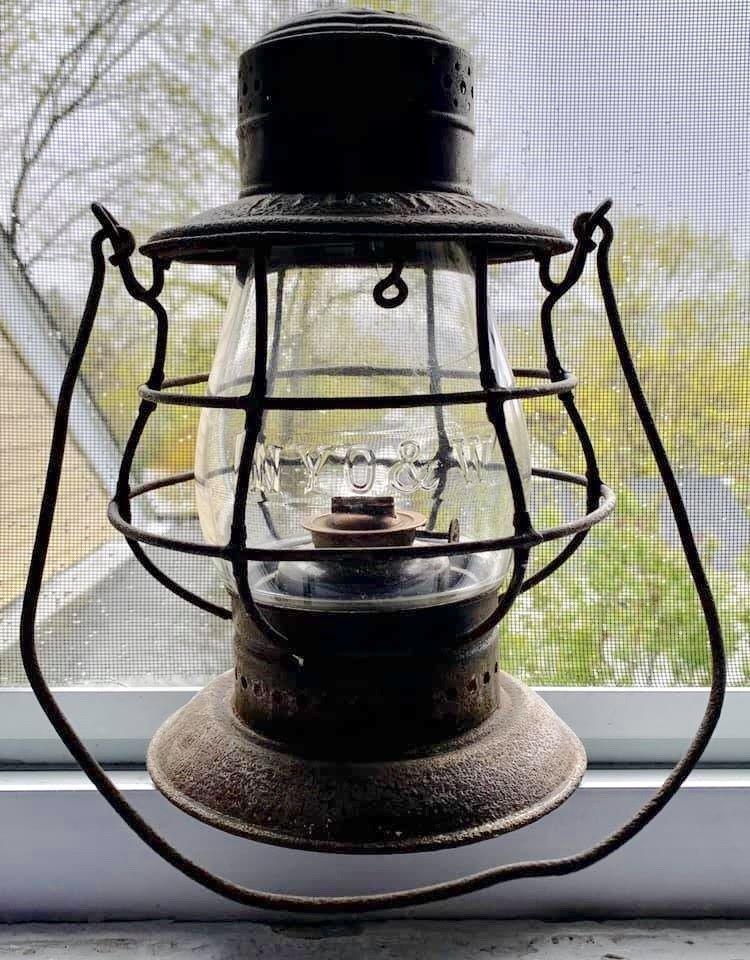
A New York, Ontario & Western Railway Deitz No. 6 “bell-bottom” style hand lantern, C. 1890-1910.
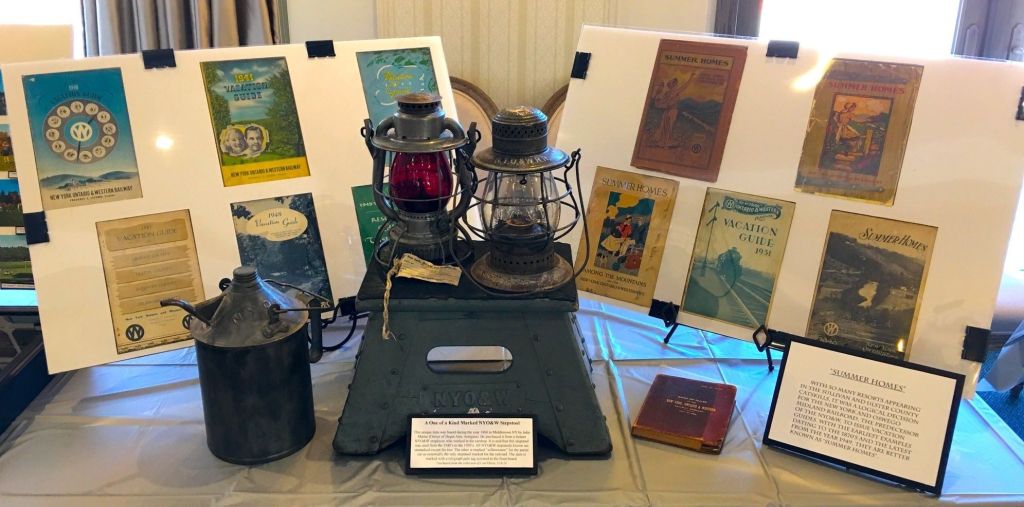
A display of artifacts from the New York, Ontario & Western Railway at a convention of the Ontario & Western Railway Historical Society. Prominently shown here are several editions of the “Summer Homes” vacation guides, issued from 1878 to 1949 for vacationers traveling from New York City to the Borscht Belt and other Catskill destinations. Though several years are still missing, this collection has one of the largest assortments of Summer Homes guides which are invaluable for research on the Borscht Belt era.
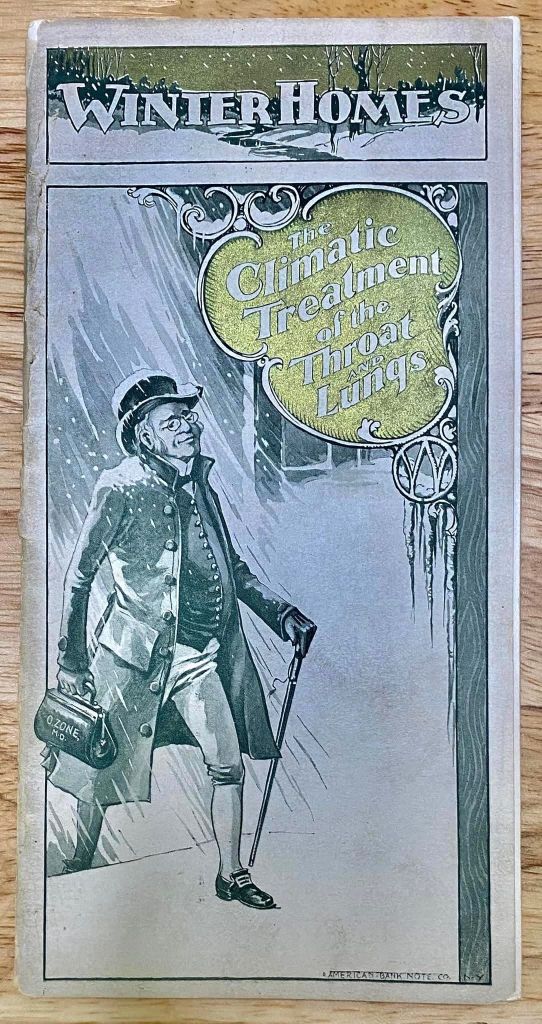
The collection has a few “Winter Homes” publications as well, even more difficult to find than the Summer Homes. These were issued to advertise the large amount of Tuberculosis Sanatoriums in Sullivan County during the era of 1890-1910.
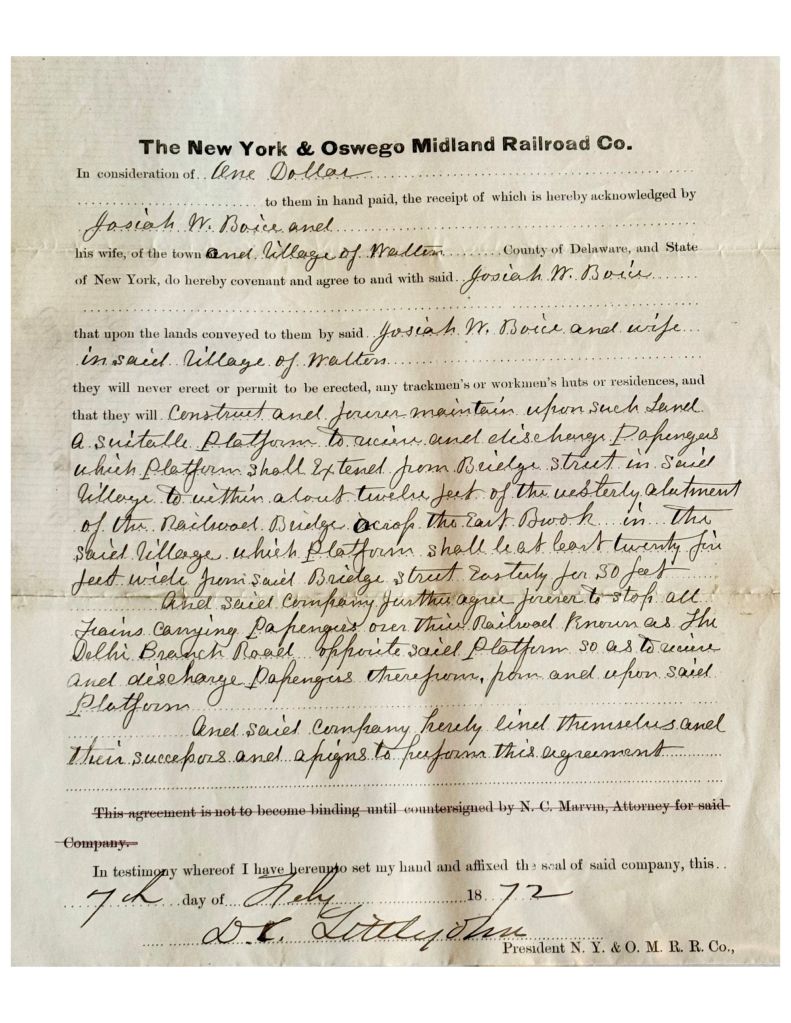
This C. 1872 agreement with Josiah M. Boice of Walton, NY to build a passenger platform on his property is signed by the president and founder of the New York & Oswego Midland Railroad: DeWitt C. Littlejohn.
A July, 1886 broadside for a “Special Teachers Excursion” along the New York, Ontario & Western Railway—passing through many Orange County towns such as Cornwall, Campbell Hall, and Middletown.
A July 15, 1886 letter from the New York, Ontario & Western Railway discussing the routing of an excursion from New York City to Albany over the Wallkill Valley Railroad via Campbell Hall, NY. Connecting with the Erie Railroad’s Montgomery Branch at Montgomery, the Wallkill Valley ran north to Kingston with the West Shore Railroad.
A popular sight in Fair Oaks was the massive concrete bridge that once brought old Route 17 over the New York, Ontario & Western mainline. This bridge was removed in the 1970s and replaced with a grade crossing. Though the NYO&W was abandoned in 1957, this small portion of trackage from Middletown to Fair Oaks remained in service into the 1980s.
The archive has several original images of railroading scenes around Orange County, such as this C. 1890s view of the Erie Railroad roundhouse in Port Jervis, NY.
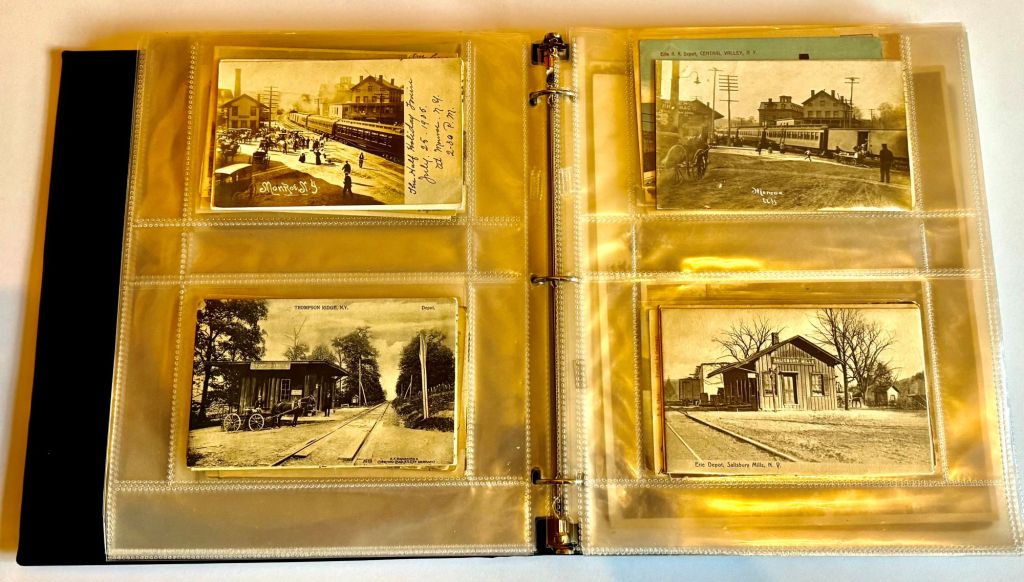
Several binders contain organized collections of postcards and images of railroad stations and related perspectives around Orange County.
Various railroad timetables from the 1890s through the 1940s, all issued from the New York, Ontario & Western Railway.
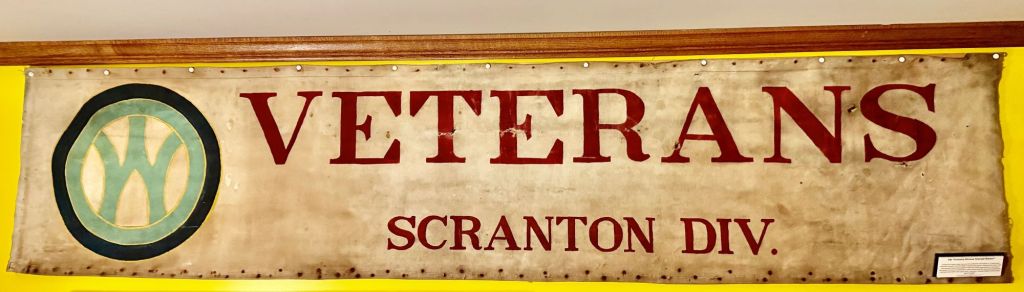
One of the highlights of the collection is this 12’ banner from the New York, Ontario & Western Railway Veterans’ Association.
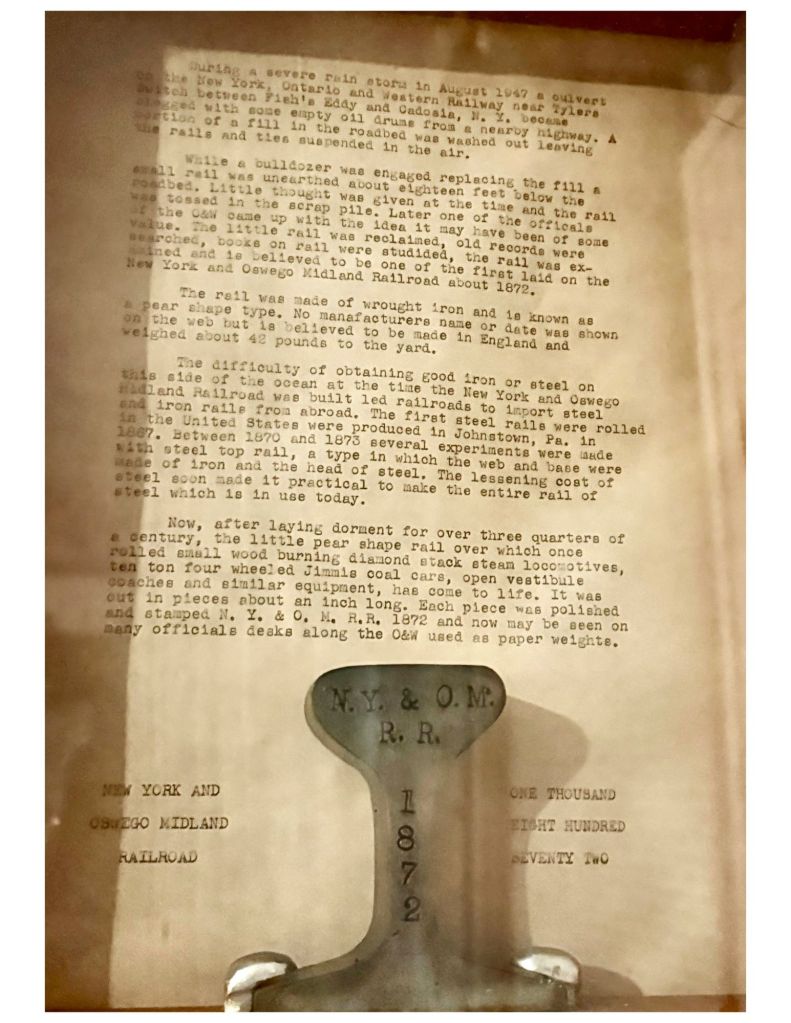
This small segment of rail was from the original New York & Oswego Midland Railroad, opened in 1872 between Weehawken and Oswego through Orange County. Uncovered near Cadosia, NY in Delaware County after storm-related damage in 1947, short sections of this rail were turned into paperweights for railroad officials and used for the next ten years until the railroad’s closure in 1957.
For research inquiries or other questions, please contact me here:




















 Hello. I'm Alex.