
I have been a student learning about local history for much of my life. Even before I started college and my first public lecture, I digested great insight through regional historical societies. Here, the like-minded passions of fellow members acted as a nexus of information and friendships. As the youngest member of the Ontario & Western Railway Historical Society, I eagerly waited for the first Friday of each month when they would hold their monthly meetings in the Mulberry Senior Center of Middletown, NY. I reveled in their meetings that began with an informal gathering where members would sell and trade railroad items. They followed Robert’s Rules of Order and established a pattern that I would later diligently follow as the youngest member and later president of the Hudson Valley Bottle Club. What I loved best about these monthly meetings were the featured lectures that followed, complete with images that captured the once rich history of local railroads. I always had to leave early because my parents worked the following day, but those meetings left an indelible mark on my psyche.
Dedication
Inspired, I dedicated myself to learn, acquire, and assemble information that I would soon share with my fellow members at the Woodbury Historical Society (WHS). : I first joined WHS at age eleven and was elected to their board of trustees at fourteen where I still serve today in addition to being their collections manager. At WHS, I began to discover my interest in presenting history to the public and the first of these projects was known as “Fifty Items that Tell the Story of Woodbury.” Modeled from a New York Times article titled “Fifty Items that Tell the Story of New York,” the general idea was to bring together fifty artifacts of all shapes and sizes that told the story of our local history. The presentation attracted well over fifty items and brought out new finds and individuals interested in our town’s history. One year later, I gave my first lecture before WHS titled “The Erie Railroad’s Shortcut Then and Now” which attracted more than one hundred people. That lecture would be one of more than forty that I would give before graduating from high school. One lecture, as a junior in high school, caught the attention of a regional reporter for the Orange County Magazine. That article made its way to the history department at Marist College where one of the professors brought the article to their meeting insisting “this is the kind of student we need to get here.”

College Student, Author, and Guest Lecturer
Two years later, I would attend Marist.
In high school, I didn’t play any sports but the local libraries, senior centers, and museums became my arena and field of dreams where I was able to soar while sharing my passion for local history. Each lecture was a unique opportunity to communicate and connect with a diverse audience. This was my “Facebook” with one exception; we actually met in person—face-to-face.
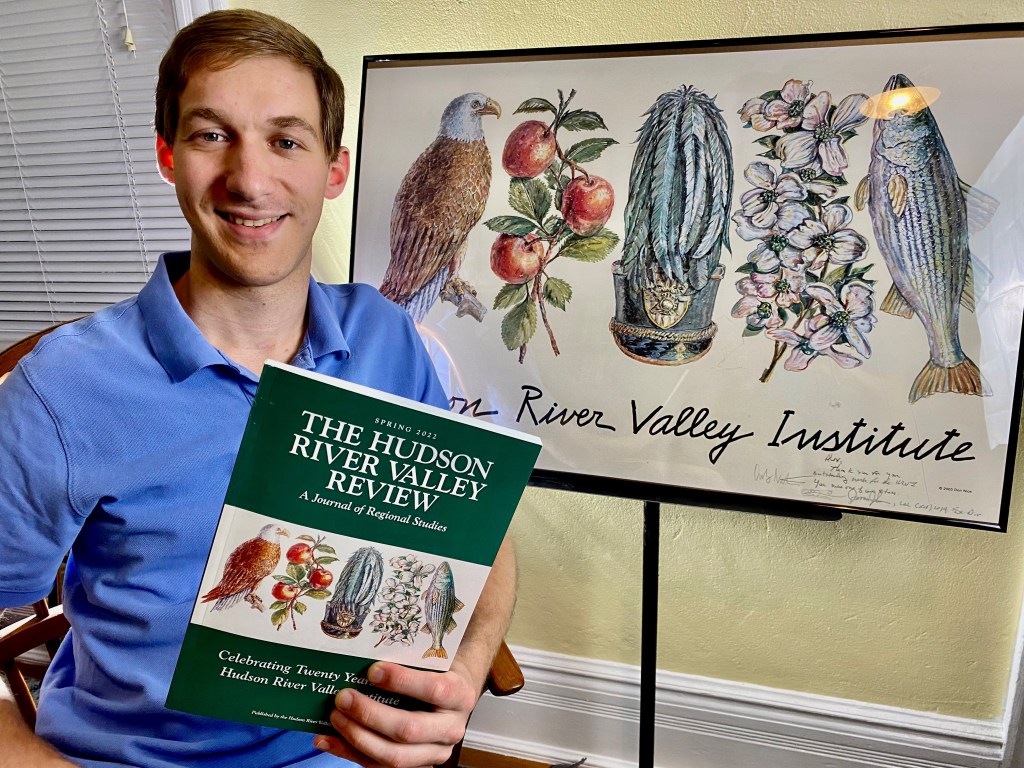
The COVID-19 Pandemic would present some of the most difficult obstacles. Unfortunately, I have witnessed some members of these historical societies become infected and perish from this awful virus. Societies, in general, suspended their lectures and meetings—instead opting to move to an online setting. I choose to use this time to write and, beginning in March 2020, I published “How Bottles Talk To Us, and the History They Tell” in the Antique Bottle and Glass Collector magazine. That followed with Marist’s Hudson River Valley Review which, in May of 2020 printed my essay “When Steel Rails, Glass Bottles, and Fresh Cream Ruled the Country; Orange Country’s Role in the Birth of Transporting and Marketing Milk” and “The Rondout Valley’s Glassy Past: The Ellenville Glass Works, A Forgotten Hudson Valley Industry” in May 2022. The Antique Bottle and Glass Magazine would feature another submission in October with my article on “Tin Tops—The Pioneers of Milk Bottles.” Finally, the Orange County Historical Society published my essays on “The Erie Railroad’s Race for a Shortcut: The Story of Woodbury’s Three Sister Railroad Stations,” “Orange County’s Forgotten Trackside Past: The New York, Ontario and Western Railway’s Meadowbrook Station and the Cornwall Railroad Triangle,” and “Struggle, Strike, and War: How Orange County Dairy Farmers Battled for Fair Treatment at the Turn of the Twentieth Century.”

PodCasting
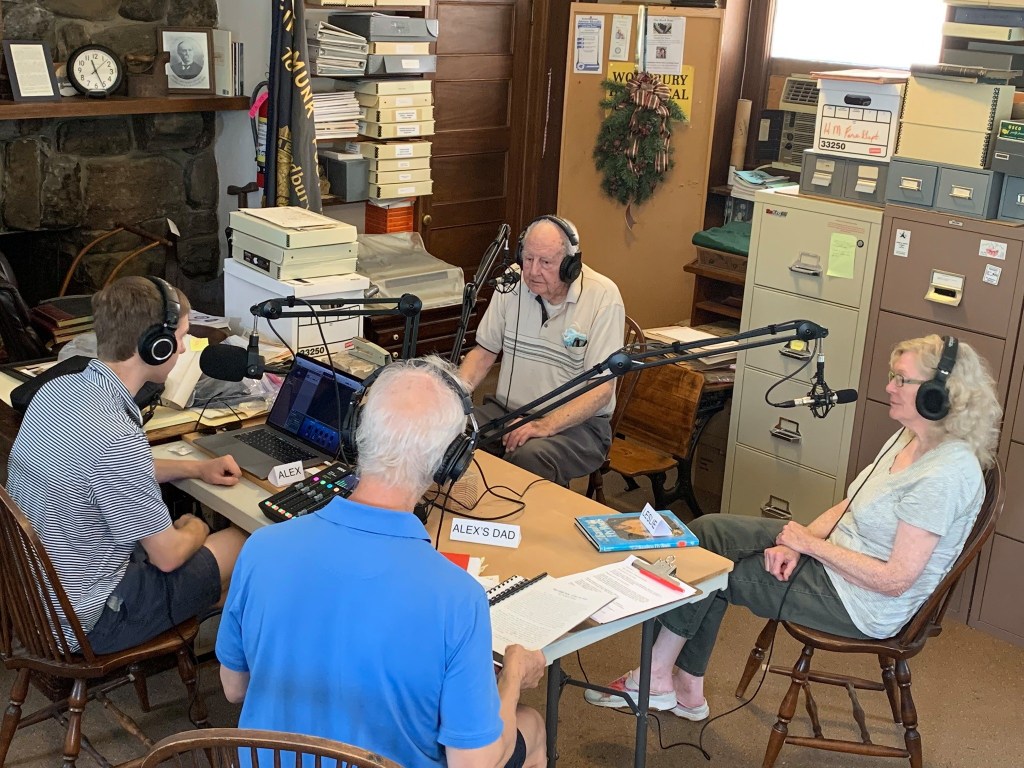
In the spring of 2021, I produced and debuted a series of podcasts entitled “A Walk Through Woodbury” which investigates one topic on local history per episode. To date, I have produced five episodes: “The Dairy Farms of Woodbury,” “The Jewish Bungalow Colonies of Woodbury,” “When The Railroad Came Through Woodbury,” “Famous Residents of Woodbury,” and “Hotels of Woodbury.” Each story features incidental music (performed by me) and sound effects to help move the story forward. Additionally, special guests are invited to our recording sessions while hosting a regular roundtable of experts. There is also a mini-video series called “In A Woodbury Minute” which explores individual facets of history in two to five-minute segments. Six episodes were published during the summer of 2021. These podcasts can be found here: https://alexprizgintas.com/mypodcasts/.
From Undergraduate to Graduate Studies
In the fall of 2021, I returned to my last semester as an undergraduate student at Marist College to complete my studies in history with a minor in Hudson River Valley Studies and a concentration in public history. This was the first time that classes were held in a semi-normal state since the COVID-19 pandemic began and, though I had grown used to the hybrid format of classes, this was a pleasant return to standard routine where I officially graduated on January 31, 2022 summa cum laude. Between January and August of 2022, I remained busy with a busy schedule of bookings for lectures and musical performances (I gained approximately seventy events for the 2022 season) as well as performing research and writing for future articles. In August of 2022, I returned to Marist to pursue a Masters in Public Administration. Having studied history for three and a half years as an undergraduate student, it is my goal to use the leadership and management skills offered by an MPA degree to lay the foundation for a museum that preserves various facets of Orange County’s neglected history.
During my last year of undergraduate studies, I began my second internship at the Hudson River Valley Institute where I produced one of my crowning achievements thus far at Marist: a thirty-five minute film on the impacts of landscape architect Frederick Law Olmsted in the Hudson Valley. This documentary can be viewed here:
Turning a New Page
Entering 2024, I successfully attained my Master’s in Public Administration from Marist College, summa cum laude with a 4.0 GPA. While earning this degree through 2023, I was appointed as an advisory board member to the new Catskills Borscht Belt Museum of Ellenville, NY which correlates my passions of collecting artifacts from the hotels and bungalow colonies of Sullivan and Ulster Counties. In enhancing my skills as an administrator, I will be interning this summer with the West Point Museum with director David Reel amidst the Museum, Historical, and Memorialization Committee–the entity at West Point that advises the Academy and Garrison on the details of constructing statues, graves, and building dedications. As my activities as a student in the field of education, at least for now, come to an end, I am immensely thankful to all those at Marist College who have made my experience extremely rewarding since 2018. Moving forward, I have begun researching the professional employment sector but I am confident that Marist will continue to be an important facet of my work. In April, I will be returning to the institution with my first experience as an instructor for the college’s Life Long Learning programs held at the nearby Locust Grove Historic Site. This first four-part course will cover topics of neglected history in the Hudson Valley as seen through artifacts. I will also be instructing a similar course for Vassar College’s version of this program in March 2024.
My work as a self-employed lecturer and musician, 2023 was an astounding success with 135 bookings as far south as Fair Lawn, NJ to as far north as Chatham, NY. This year, I was particularly fortunate to receive a $1,000 community arts grant from the Orange County, New York Arts Council which has heightened the quality of my concerts by introducing a new 1,000-watt Yamaha amplifier. From a “Salute to Broadway” to the “British Invasion” and “A Night at the Opera,” twelve concerts have been compiled and/or are close to complete—all of which are derived from the original “Bach-2-Rock” performance. Additionally, 2023 saw the debut of new lectures such as “Rails to the River: The Story of Newburgh’s First Railroad” and “Borscht Belt Material Culture: Artifacts from the Catskills Resort Age”—a program tied with my work as an advisory board member for the Catskills Borscht Belt Museum. I am thankful to the libraries, senior centers, and community venues that are consistent supporters of my work; as of today, I have already secured nearly half of this year’s total bookings for the first nine months of 2024.

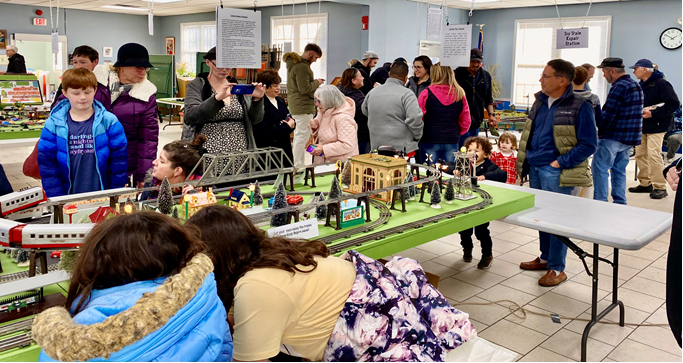
In April of 2023, I was elected as president of the Woodbury Historical Society—an organization that has had a significant impact on my perspectives of local history. This was complimented in 2025 with my appointment to Town Historian of Woodbury, inheriting the position from my long-time friend and colleague Leslie Rose. I was very fortunate to receive this two opportunities with a strong foundation already in place and an enthusiastic team of board members has allowed us to greatly expand the historical society’s impact on our community. With revised graphics, reorganized collections, and a coherent bridge of communications between our leaders and membership, we are excited to increase our public awareness with two annual events in particular. Our winter “Toy Train Legacy” show targets young, diverse audiences by partnering the entertainment of antique toy trains with history—coupled with multiple operating toy train layouts and exhibits. Likewise, in the Spring season, we have spearheaded the “Fifty-Themed” event series which brings multiple historical societies together to share local history. In 2024, the event “Fifty Items that Tell the Story of Orange County” had a debut of ten historical societies and, for 2025, “Fifty People that Shaped Orange County” raises that number to twelve. Both our one-day toy train and “Fifty-Themed” events attract anywhere from 250 to 300 attendees on average, and it is my hope that their success can be grown to generate a true movement of historical preservation and interest for Orange County.
Here are some images portraying my development as a historian:

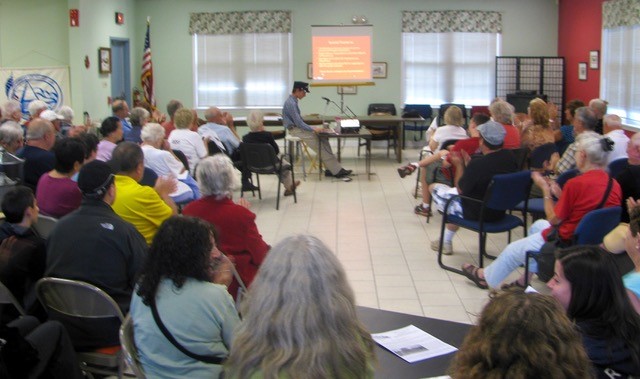


my work in the community. Also pictured are Woodbury town historian Leslie Rose and long-time
mentor Herman Galberd.


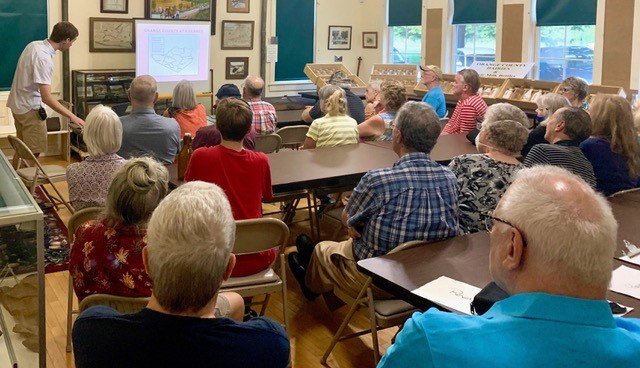

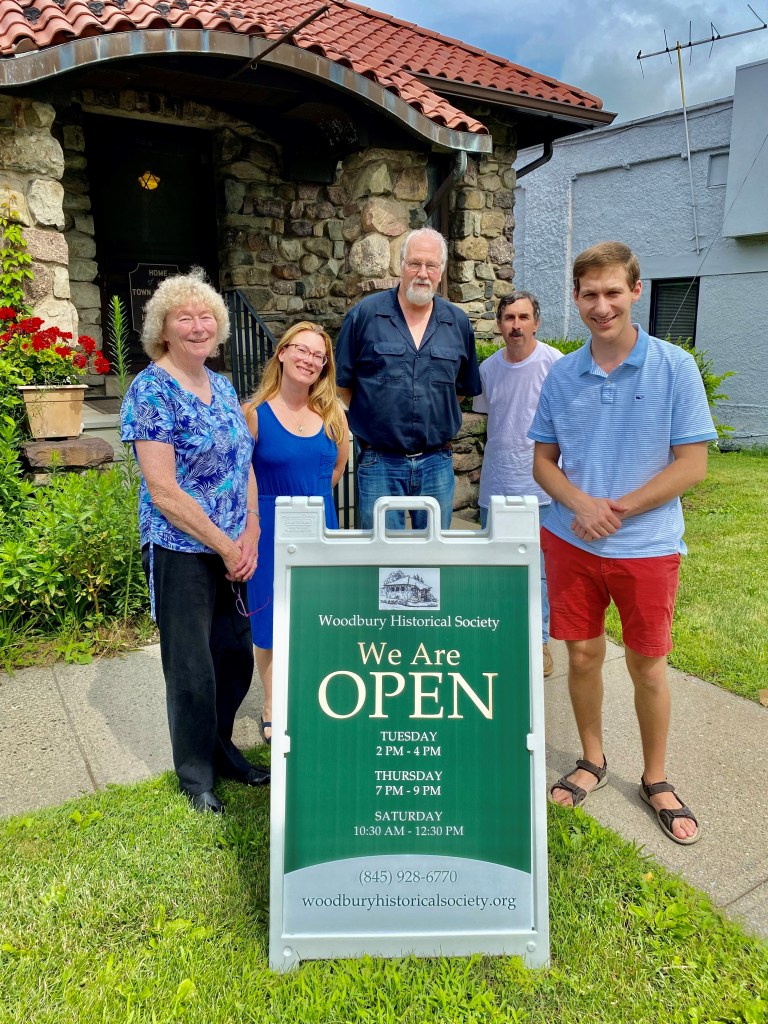



Starting in January 2025, I received the great honor of being appointed as Town Historian of Woodbury, Orange County, NY. My work follows in the steps of my mentor, Leslie Rose, who I first met at the Woodbury Historical Society when I was eleven years old and continue to learn from to this day. As both town historian and president of the Woodbury Historical Society, my continued goal will be to expand the interest and accessibility of our local history to wide, diverse audiences.
 Hello. I'm Alex.